
Farming the Permian

Programming Note: I’ll be out of the office this week and back in your inbox next week. How many Axios-reported ceasefires do you think we’ll get in that time? See you then.
There’s a great chart from the U.S. Department of Agriculture (USDA) showing that the number of farms in the U.S. has declined dramatically, while the total amount of farmland has remained relatively stable.
The result: average farm size has increased significantly over time.
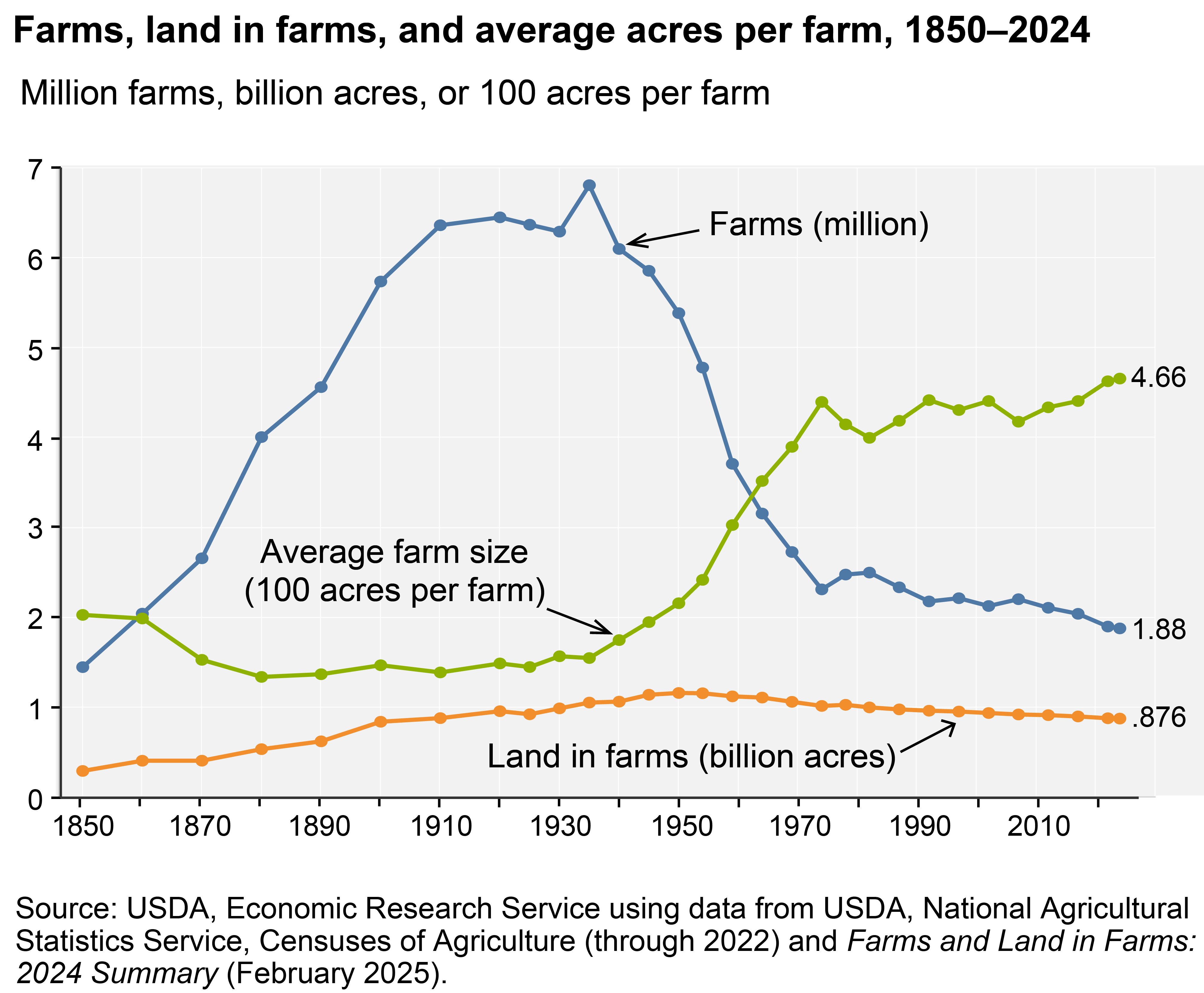
The reasons are many, but at the core is an explosion in productivity growth.
Farmers have access to better technology, better tractors and sprayers, improved planting techniques, higher-quality seeds, and more effective fertilizers—the list goes on.
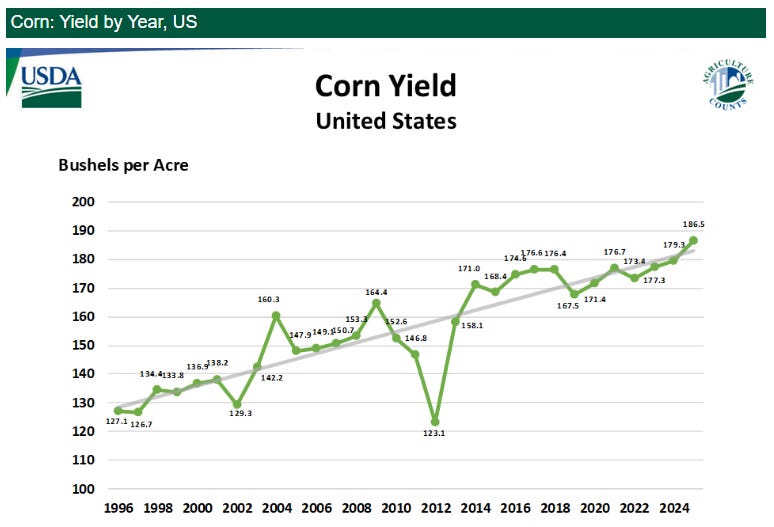
That’s why crop yields continue to rise.
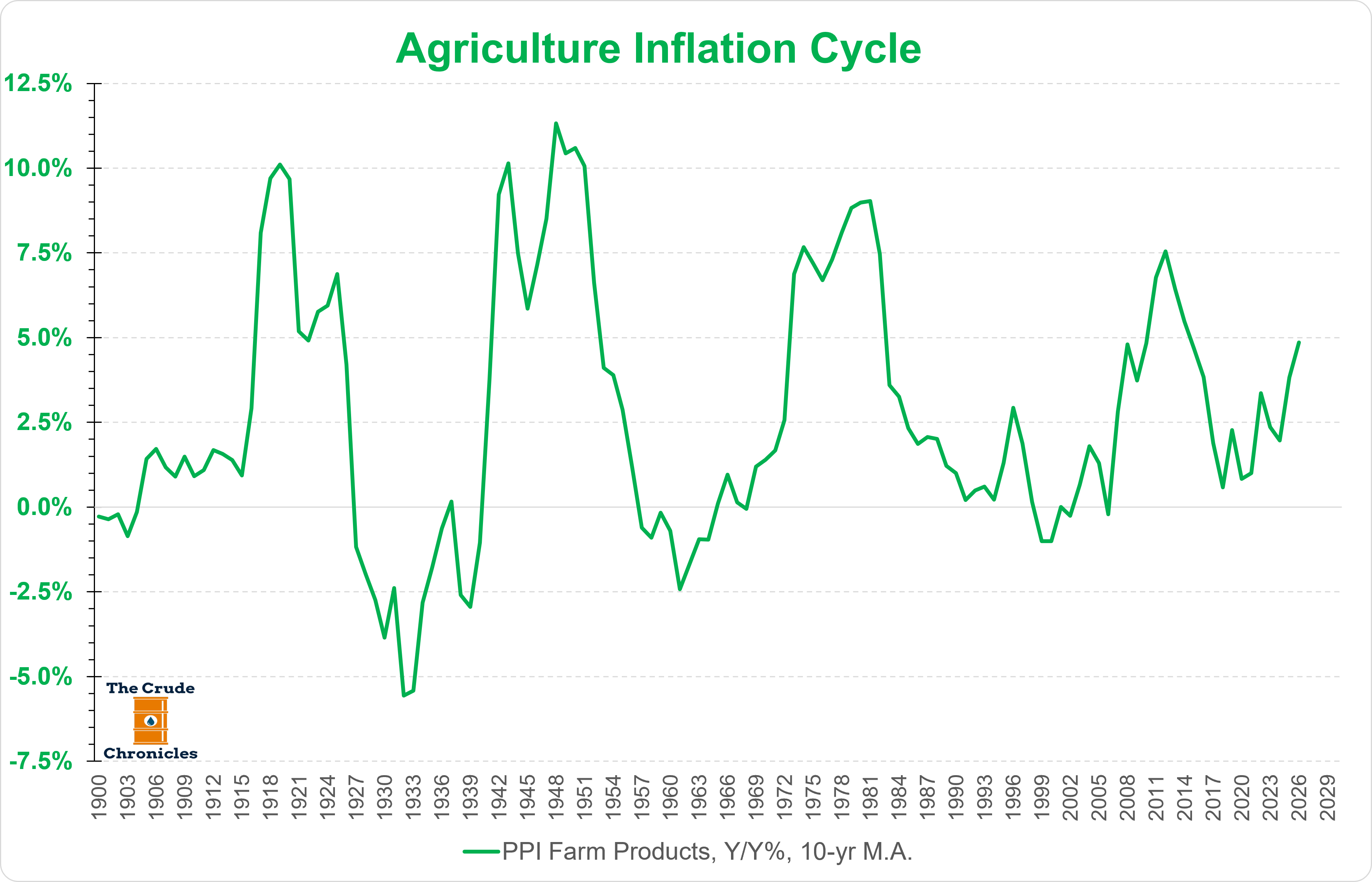
Despite this long list of advancements in human ingenuity that keeps the Malthusians at bay, we still experience periodic inflation in agricultural commodities.
We are in one of those periods right now.
The same analogy can be applied to the shale era, with one key difference.
In farming, land is reusable. In oil, once a well is drilled, the resource is largely depleted—barring workovers or refracs. You get the idea.
We measure our version of “crop yield” through the metric of well productivity.
For the past 13 years, the industry has delivered record production (left chart) while drilling a declining number of wells (right chart).
