
Let the Refiners Run

The Gist: Let the refiners continue to run until capacity expansion projects are once again back in vogue and management’s capital allocation strategies begin to change. Today, we see no signs of either.
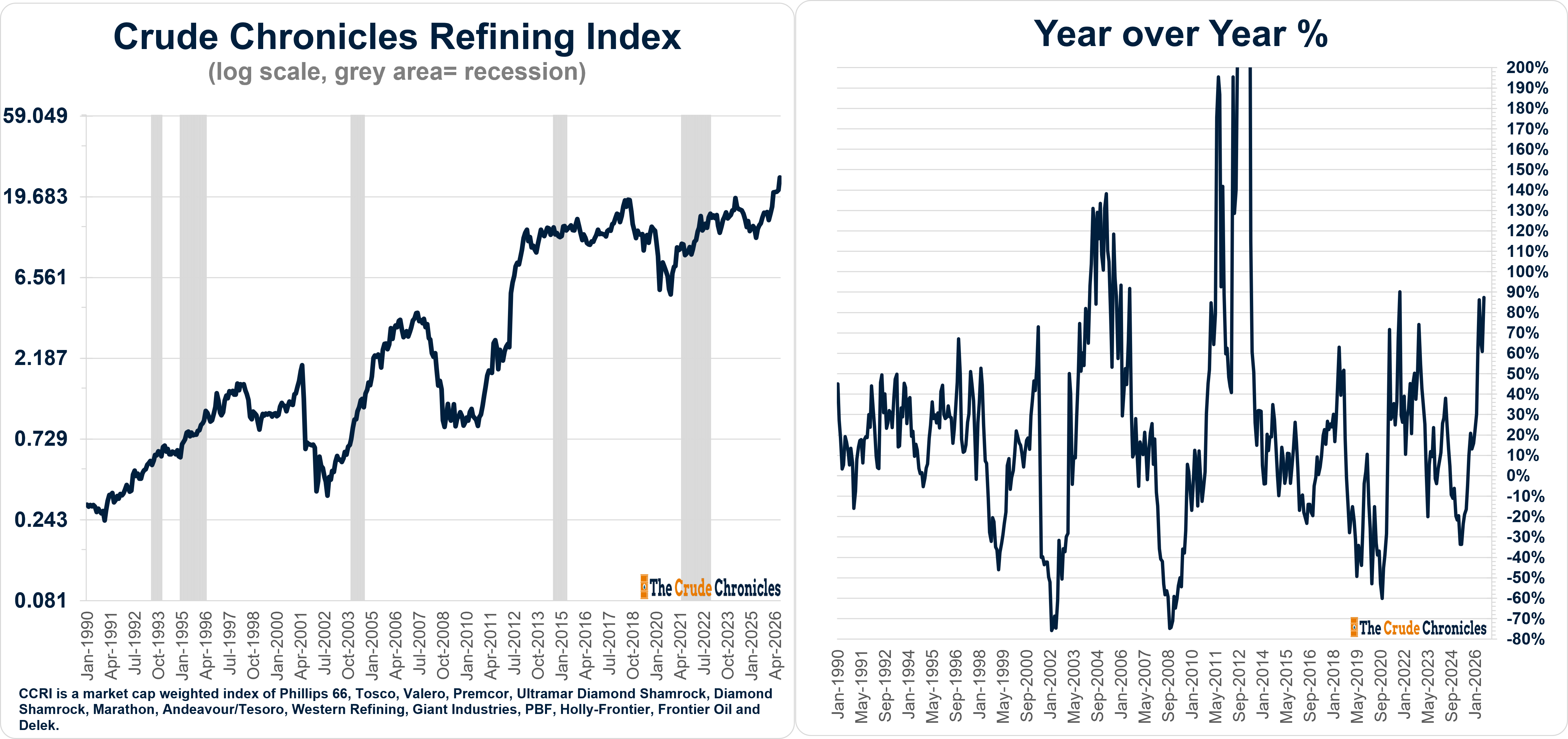
Refining stocks are up 87% year over year, placing current performance among the strongest macro backdrops for the producers of gasoline, diesel, and jet fuel. The rally is comparable to the 2000s “Golden Age of Refining,” the 2012–2013 period driven by widening U.S. crude differentials, and the 2022 Russia–Ukraine war.
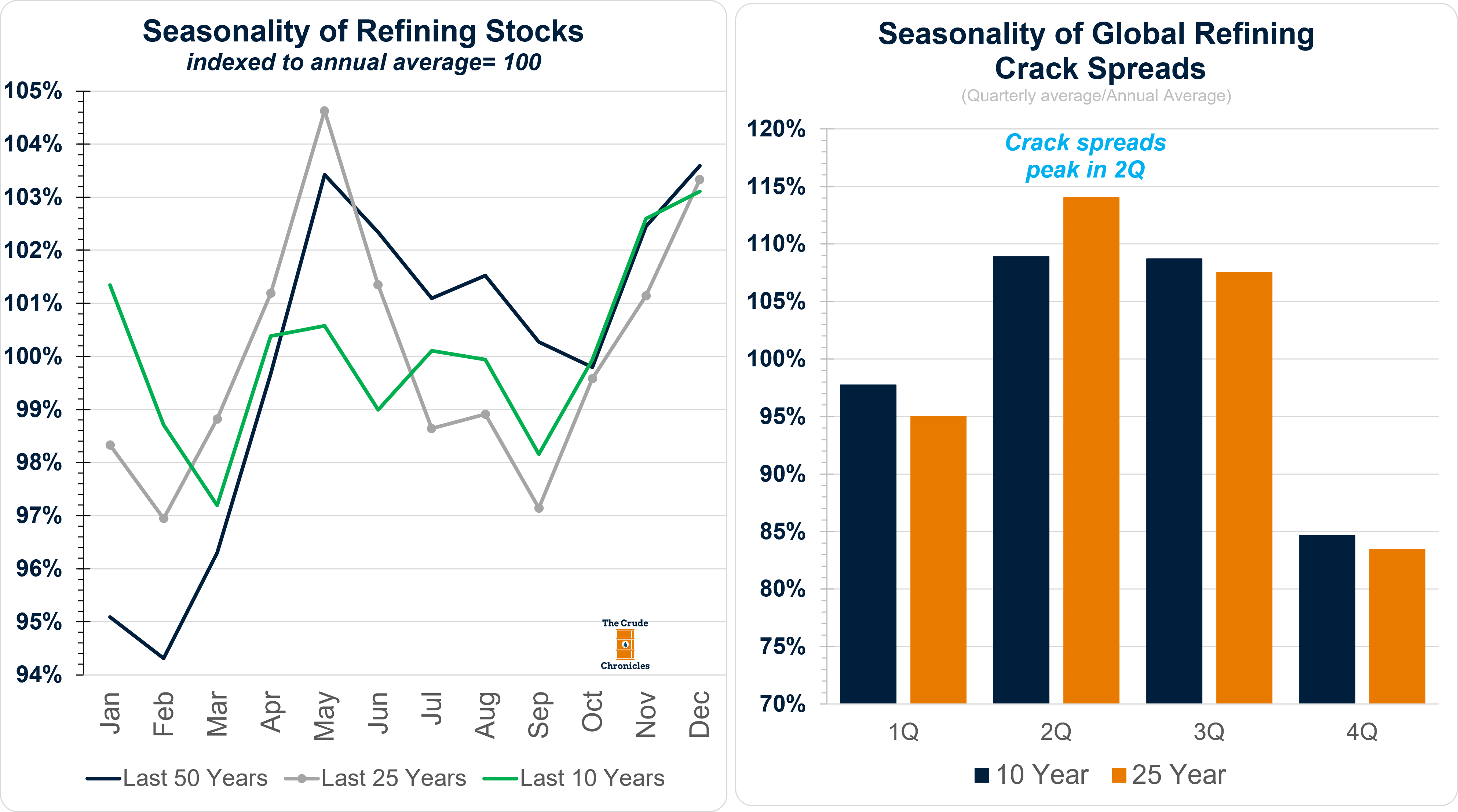
The group is bucking its typical seasonal weakness, which normally begins after second-quarter crack spreads peak.
We see several difficult-to-quantify macro risks to the refining thesis:
A Russia–Ukraine peace deal that reduces disruptions to Russian oil and gas infrastructure allowing refining capacity to be repaired.
A U.S.–Iran agreement that brings idled Middle Eastern and Asian refining capacity back online.
A global economic slowdown that weakens refined product demand.
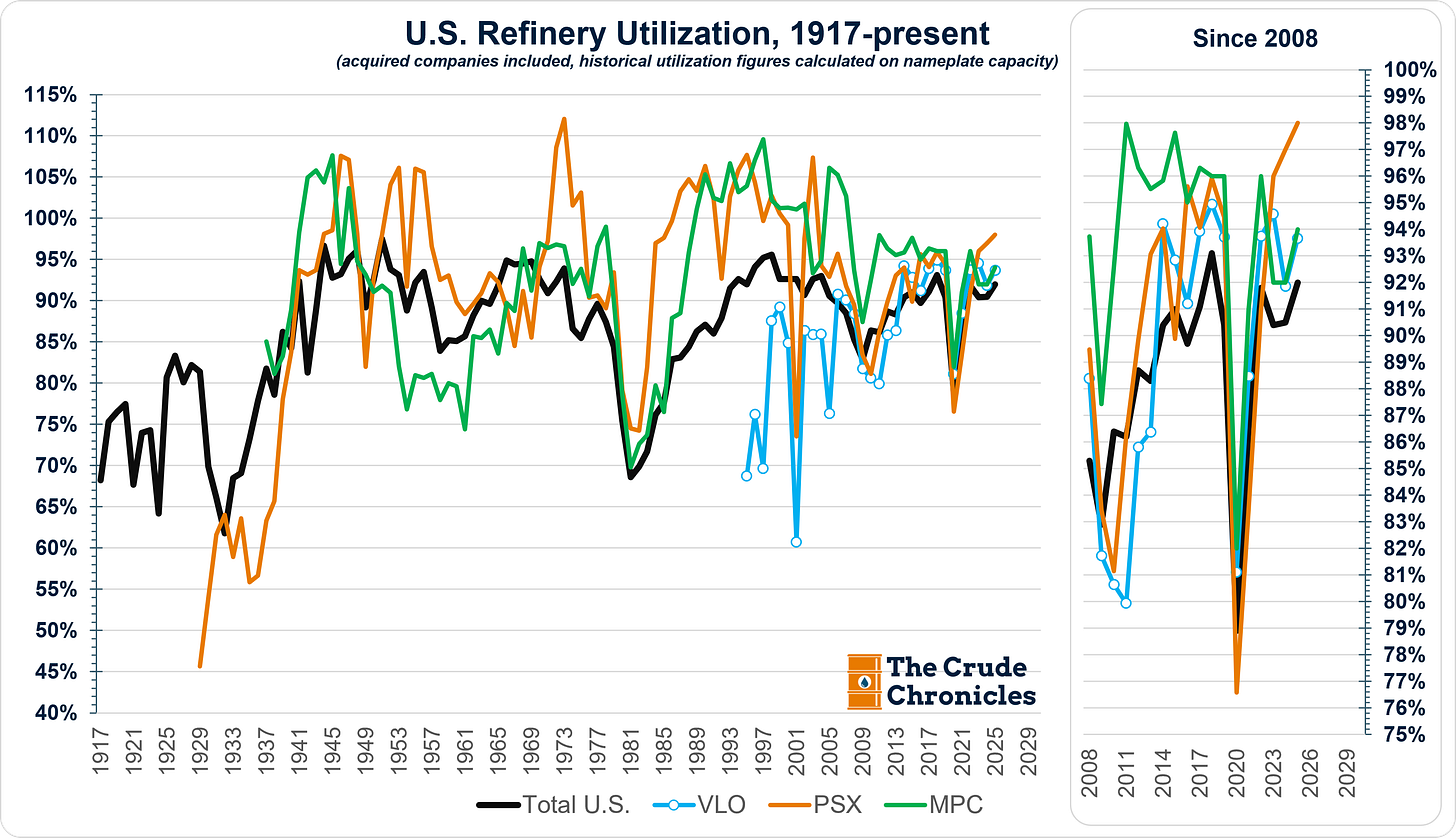
Unexpected downtime caused by running capacity >90% utilization. With the Gulf Coast hurricane season approaching we need to be cognizant of such.
However, the biggest structural risk to the refining story is much easier to monitor and more quantifiable: the backlog of refining capacity scheduled to come online, or perhaps more accurately, the lack thereof.
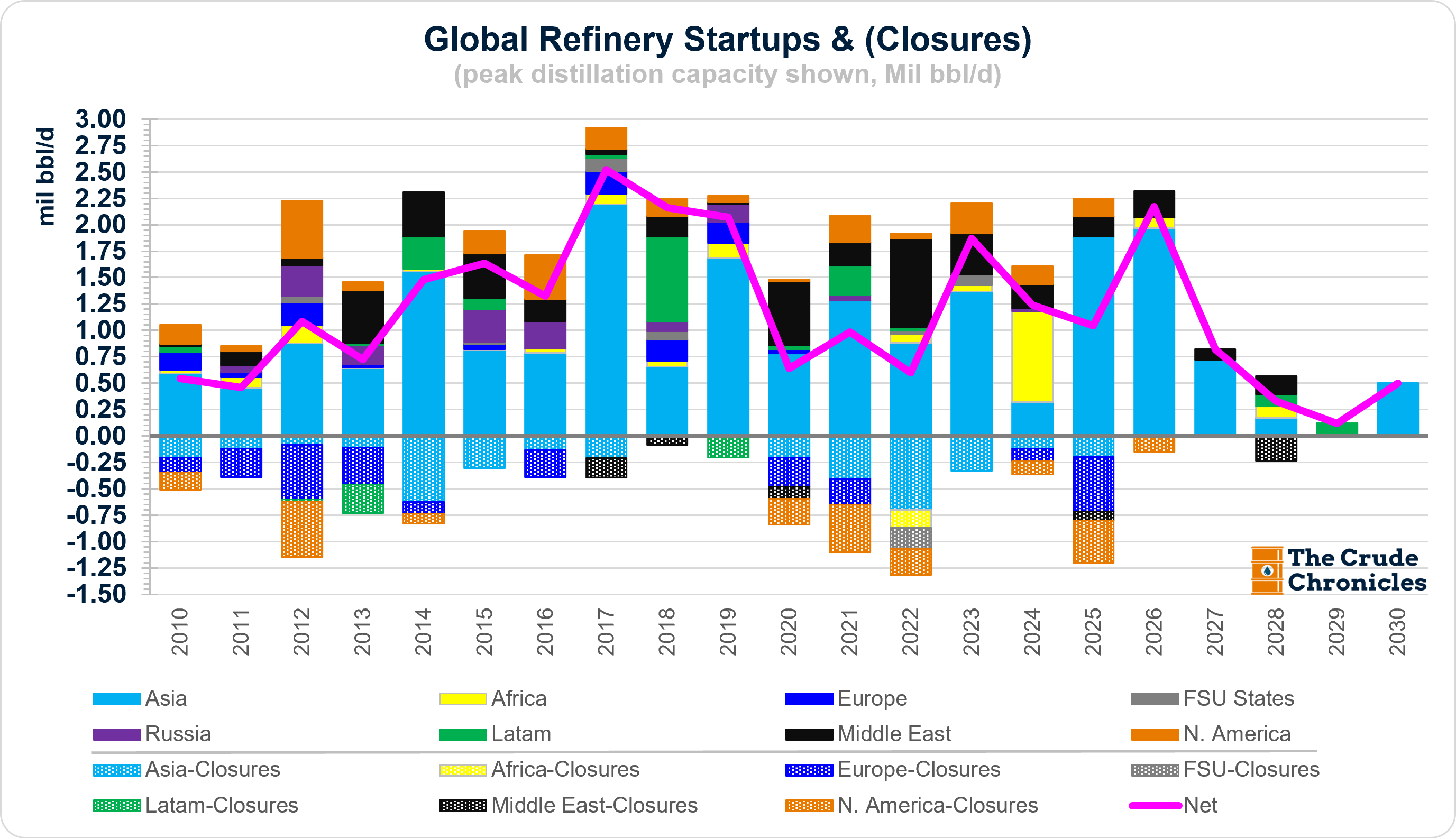
For the entirety of my career, there always seemed to be another massive integrated refinery under construction in China, India, or the Middle East. But as China pivots toward dominating the global EV market, that list of projects has steadily dwindled.
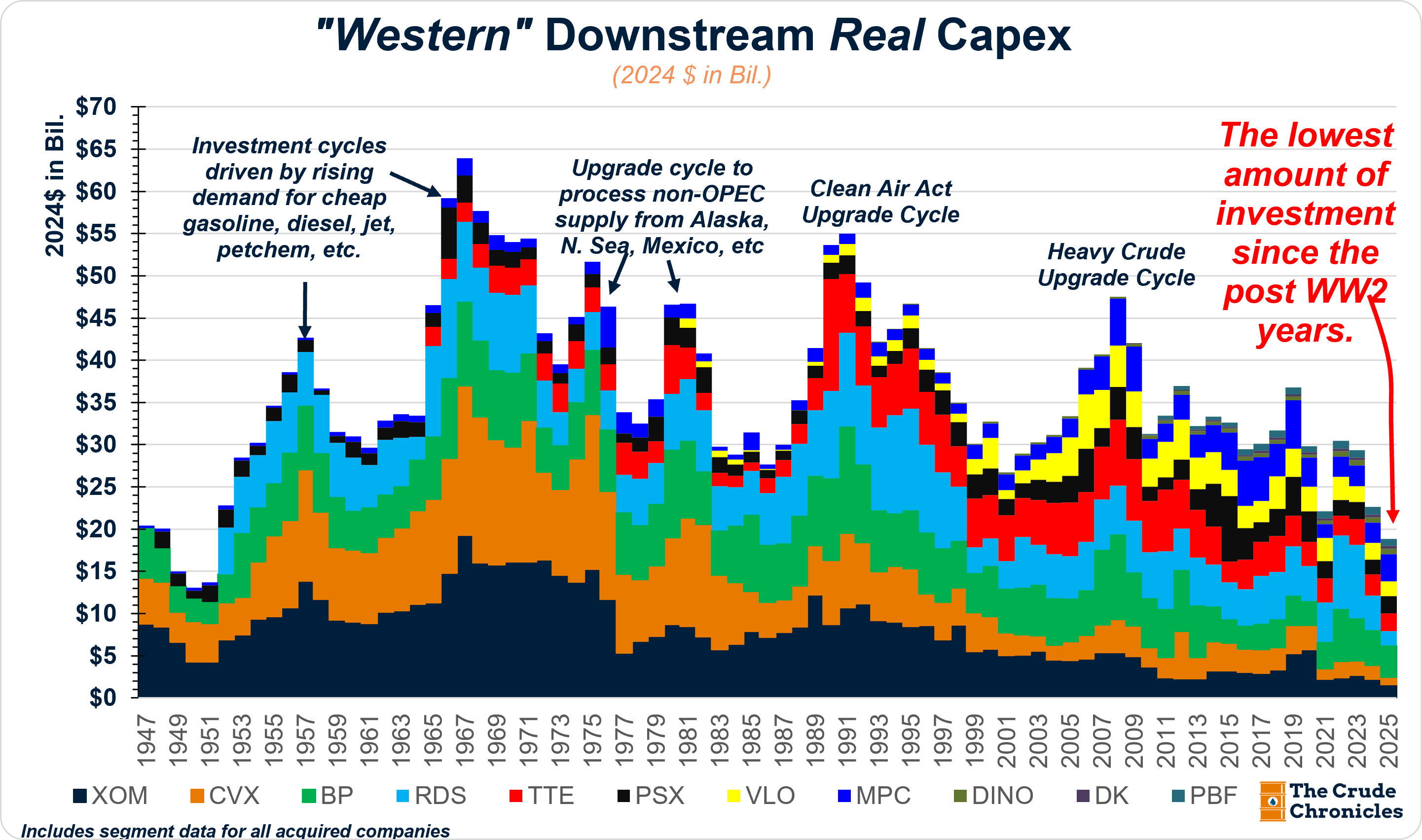
U.S. refiners are no longer in the business of building new capacity either. Environmental regulations, permitting hurdles, and climate policies have driven real refining capex to its lowest level since the late 1940s.
The boom today is in data centers, and that industry is beginning to learn a lesson refiners have known for decades: “Not In My Backyard” (NIMBY).
Even after adjusting for throughput, we find that capex per barrel of throughput remains exceptionally low.
Keep reading with a 7-day free trial
Subscribe to The Crude Chronicles to keep reading this post and get 7 days of free access to the full post archives.