
TED Talk

As the Global Financial Crisis was unfolding, there was a little-known indicator that a handful of banks and trading desks were watching closely—while most of the world paid no attention.
It was called the TED spread or the difference between LIBOR and US Treasury bills.
At the time, LIBOR was the rate banks quoted to borrow from one another, often overnight, to meet capital requirements. U.S. Treasuries represented the risk-free benchmark.
The difference between the two—the TED spread—wasn’t just a number. It was a measure of trust.
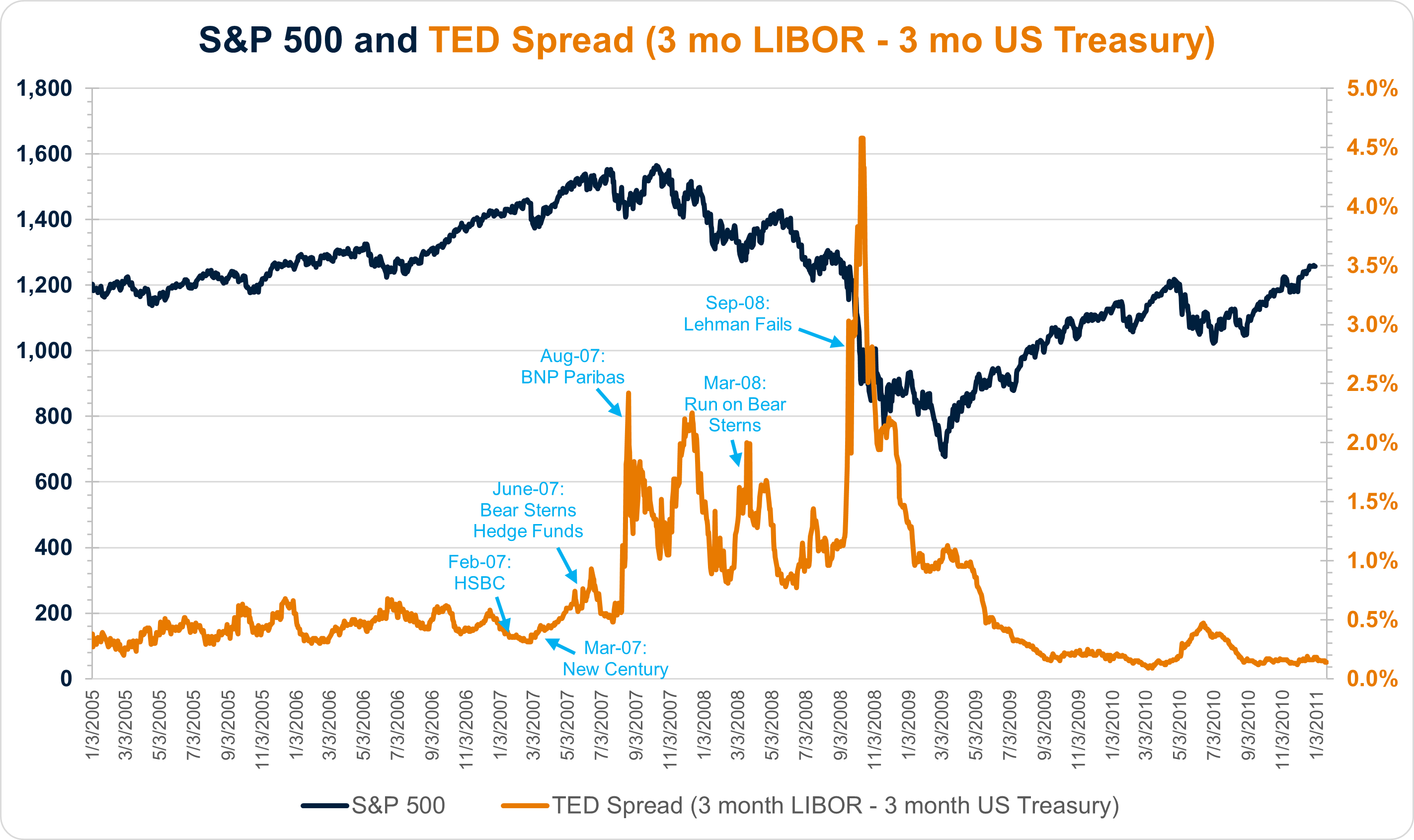
Trust that banks would lend. Trust that they would get paid back. Trust that the system itself was functioning.
As 2007 progressed, the TED spread began to widen.
But the market shrugged it off. Equities held in and credit markets ok and the job numbers continued to look fine.
The narrative was intact.
A few people noticed what was happening but most didn’t.
By the time everyone understood what it meant—that banks no longer trusted each other to lend even overnight—it was already too late.
Lehman collapsed, and suddenly, everyone knew what the TED spread was.
Myself included.
Fast forward to today, and the feeling is familiar. But this time, the problem isn’t financial liquidity among banks
It’s economic liquidity.
Because at its core, GDP is nothing more than energy transformed.
And while the Strait of Hormuz hasn’t disrupted interbank lending, it has disrupted something arguably just as fundamental to economies—the flow of oil and the system that turns it into usable energy. The refineries in Asia.
And just like the TED spread quietly signaled stress in 2007, today we have our own indicator: crack spreads.
More specifically—jet fuel is ground zero. It is our HSBC as evidenced below.
