

The Gist: Texas Railroad Commission data suggest well productivity growth is slowing as gains from the industry’s highest-producing wells become increasingly difficult to achieve.
In the early 20th century, the Texas Railroad Commission (TRC) was given the authority to regulate the production of oil and gas as the state was concerned with the waste that came from uncontrolled production, chaotic and excessive drilling activity resulting in overproduction and falling prices.
The TRC began using its authority to issue proration orders—setting allowable production for each well and field.
One of the lasting results has been the ability to track the number of producing wells throughout the decades allowing us to track productivity in the Lone Star State.
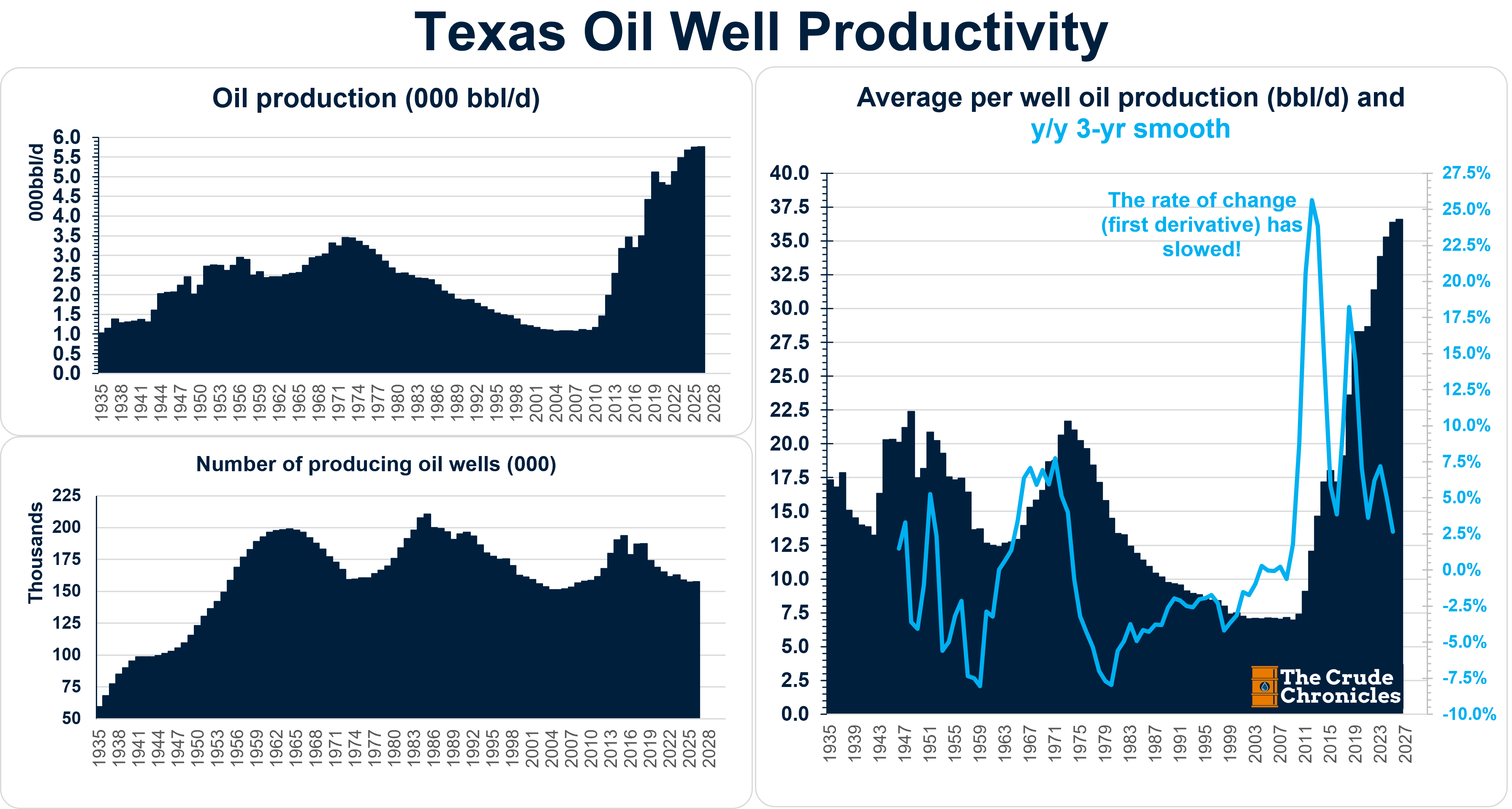
At the macro level, trends in industry wide well productivity drive the marginal cost of production which drives prices.
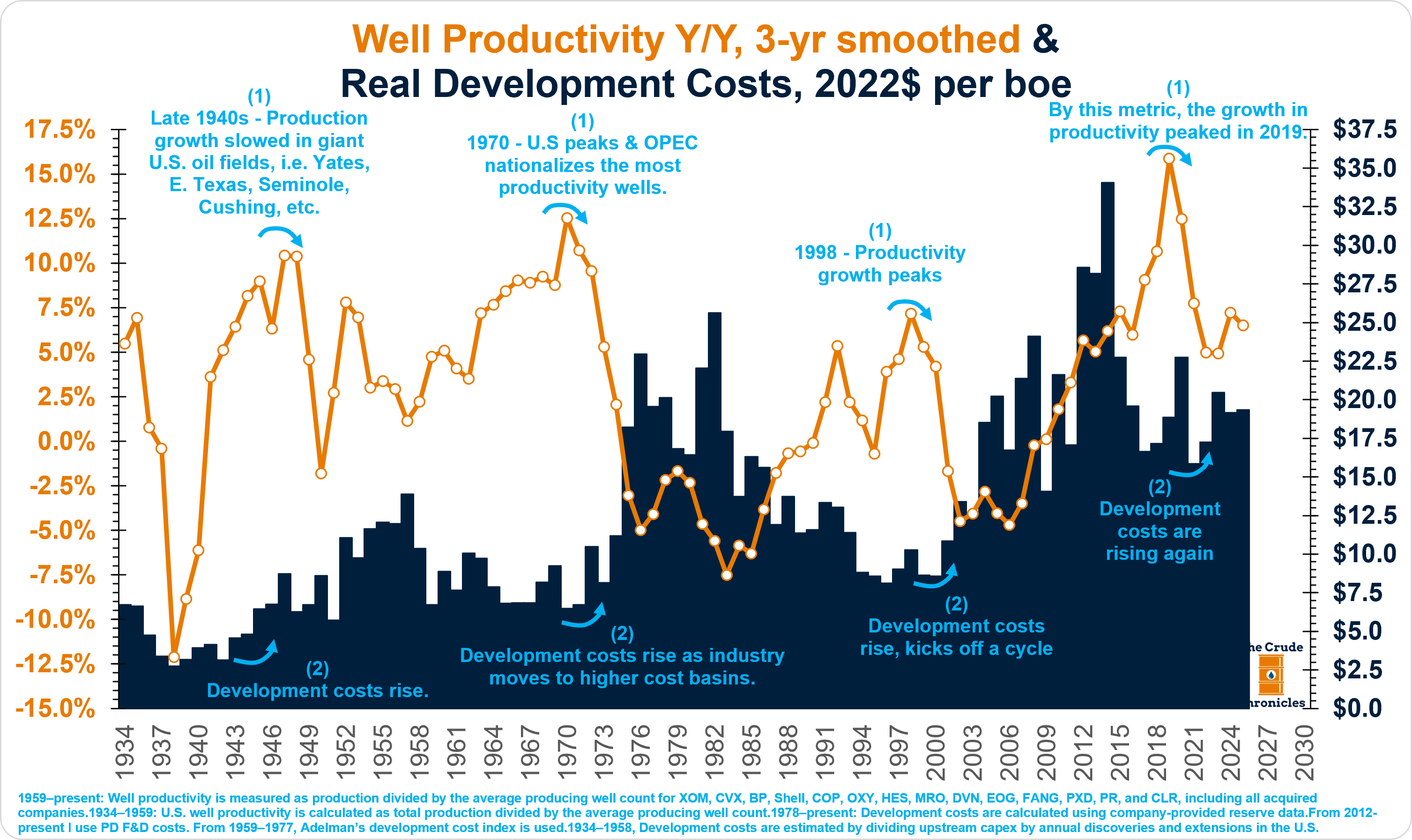
The challenge with this framework is that, unlike the global supply, demand, and inventory data relied upon by most forecasters—which can be downloaded with ease from the EIA, IEA, or OPEC—well productivity data are far more difficult to compile and analyze. They simply require a bit more legwork.
The effort is worthwhile because the distribution of well productivity resembles the distribution of income in the U.S. economy. Just as the top 10% of income earners account for roughly half of all consumer spending, the top 10% of oil wells account for roughly half of U.S. oil production.