
Value in Oil Shocks

The Gist: In an energy-induced recession, energy stocks typically decline on an absolute basis but still outperform the S&P 500. The market is beginning to recognize that capital will be treated more favorably in the energy sector, as evidenced by rising EV-to-invested capital multiples.
Yesterday was a wild ride in the oil markets to say the least!
Over the past week, many have asked: can energy stocks perform well during a recession?
The mother of them all (at least so far) was the 1973–1974 recession. After OPEC embargoed the West, prices rose so rapidly and demand destruction followed so swiftly that it didn’t matter who you were—an OPEC-exposed producer (left chart), a smaller non-OPEC independent (middle chart), or an oilfield services provider (right chart)—they all suffered.
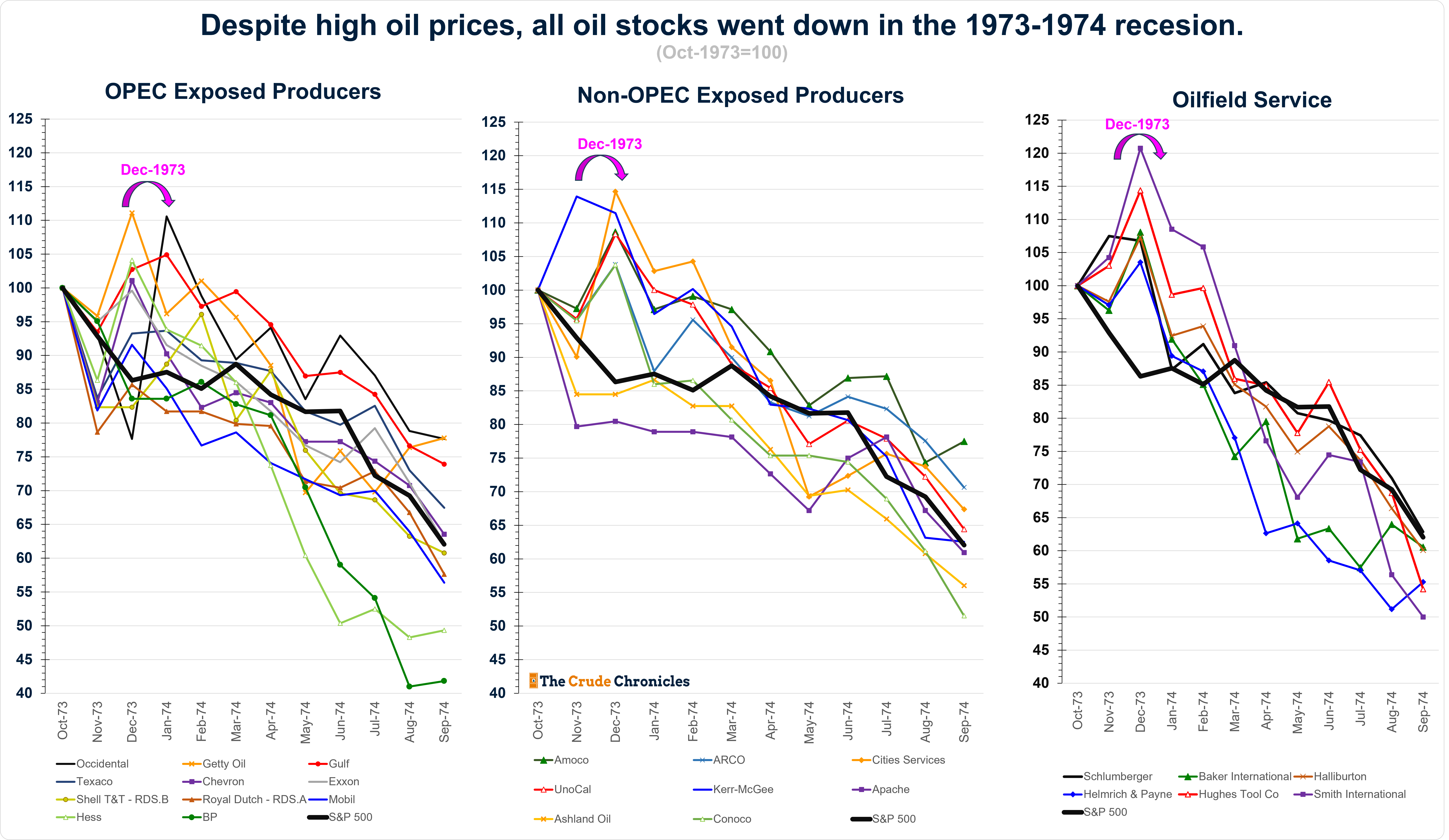
If you examine the chart above, you’ll notice that the broader market (black line) sold off sharply at first, while most energy stocks held up through December 1973 before rolling over as well.
This pattern is consistent with what we observe around major oil shocks over the past 100+ years. As shown in the inset chart on the right below, energy stocks typically rally for three months, weaken over the following four, and then find both an absolute and relative bottom roughly seven months after the initial shock.
